𝑪𝒉𝒆𝒏𝒈 𝑯𝒖𝒂𝒏𝒈, 𝑷𝒉.𝑫. 🍊

🚀 I got my doctoral degree degree from Southern Methodist University (SMU) on November 18, 2025. I am the first and also currently the only person in SMU history to complete the Ph.D. program in just two years! Prior to that, I got my master's degree from the Chinese University of Hong Kong (CUHK) in 2022. And I obtained the bachelor's degree from University of Electronic Science and Technology of China (UESTC) in 2020.

✨✨✨ I am currently on the job market and welcome any opportunities or discussions. Please feel free to reach out if there is a potential fit. ✨✨✨
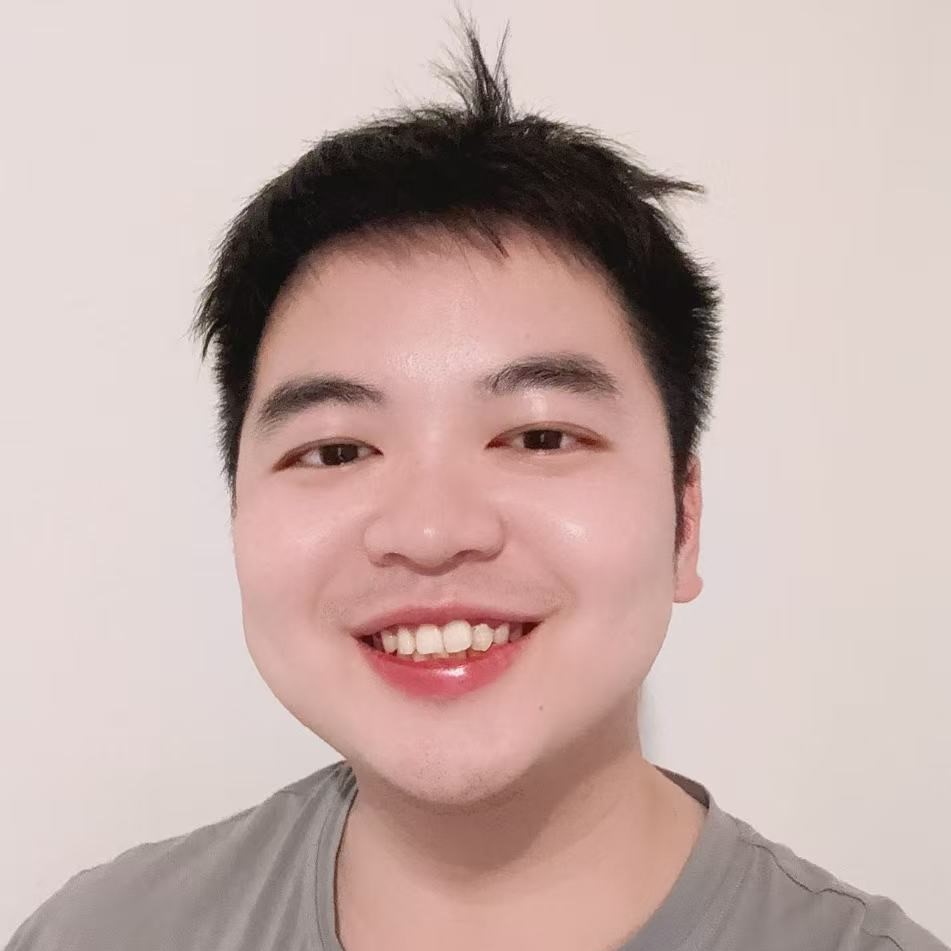

My research interests mainly focus on developing biomarker-driven multimodal AI systems for clinical decision support and disease progression modeling, specifically: Medical AI -> Developing multimodal models for diagnosis and clinical decision support, integrating diverse medical data.

    By the way, I also conduct research in the following areas:
  • AI for Finance: Designing data-centric models for risk analysis and anomaly detection, leveraging large-scale structured and temporal financial data.
  • Neuromorphic Computing: Exploring next-generation computing paradigms to enable efficient and scalable intelligent systems.
Cheng Huang

My long-term vision is to advance AI for Health Care by building clinically grounded, trustworthy, and multimodal intelligence systems. I frame this mission through the Hippocrates paradigm:

(1) Biomarker Intelligence
Discovering disease-specific biomarkers from multimodal medical data, like fundus, OCT, OCTA, and clinical metadata—through robust and interpretable AI.
(2) Clinically Aligned Generation
Developing multimodal report-generation and decision-support models that integrate imaging, physiology, and language to produce clinically reliable outputs.
(3) Autonomous Diagnostic Systems
Building agentic medical AI systems with reasoning, memory, and self-improving capabilities to support longitudinal disease progression modeling and early intervention.
Research Map

Research Map: The Schematic Overview of My Research Vision

News

Education

SMU Logo
Southern Methodist University, USA Ph.D. Degree in Computer Science • Sep. 2023 - Dec. 2025
Advisor: Prof. Jia Zhang Research Direction: AI for Diagnosis & Treatment of Glaucoma based Biomarker
CUHK Logo
The Chinese University of Hong Kong, Hong Kong Master Degree in Information Engineering • Sep. 2021 - Dec. 2022
Advisor: Prof. John Kar-Kin Zao Research Direction: AIoT for Public Health
UESTC Logo
University of Electronic Science and Technology of China, China Bachelor Degree in Information Engineering • Sep. 2016 - Jun. 2020
Advisor: Prof. Yongbin Yu Research Direction: Medical Imaging in Skin Lesion

Work & Research

NASA Logo
ZenWeave AI, USA Senior Research Scientist • Jan. 2026 - Now
Collaboration: Dr. Yadi Liu and Jingxi Qiu Research Direction: AI for Finance
NASA Logo
National Aeronautics and Space Administration, USA Research Fellow • Jan. 2024 - Dec. 2025
Advisor: Dr. Tsengdar Lee Research Direction: Medical AI
utsw Logo
University of Texas Southwestern Medical Center, USA Research Scientist • Jun. 2024 - Aug. 2024
Advisor: Dr. Karanjit Kooner & Prof. Jui-Kai Wang Research Direction: Medical Imaging in Glaucoma
SMU Logo
Southern Methodist University, USA Teaching Assistant (CS 2341, Data Structure) • Aug. 2023 - Dec. 2023
Supervisor: Prof. Michael Hahsler
UESTC Logo
Tsinghua University, China Research Associates • Mar. 2021 - Jul. 2021
Advisor: Prof. Huazhong Yang & Prof. Lu Zhang Research Direction: AI Chips Design, Electronic Design Automation
Jiuzhou Logo
Sichuan Jiuzhou Prevention and Control Technology Co., Ltd., China Computer Engineer • Jan. 2020 - May. 2020
Project: Remote Sensing
dianjian Logo
Sichuan Electric Power Design & Consulting Co.,Ltd., China Communication Telecontrol Designer • Jan. 2019 - Jul. 2019
Project: 5G Station Development

Selected Publications Total Citations

* Equal Contribution, † Corresponding Author

glaboost
GlaBoost: A multimodal Structured Framework for Glaucoma Risk Stratification Cheng Huang, Zeyu Han, Kooner Karanjit, Jui-Kai Wang, Tsengdar Lee, Jia Zhang IEEE 48th EMBC, 2026

Area: Glaucoma, Ophthalmology AI, Data Mining
GlaBoost is a multimodal framework for glaucoma risk prediction that integrates structured clinical data, fundus image embeddings, and expert textual descriptions into a unified feature space. It leverages pretrained visual and language encoders alongside an enhanced XGBoost classifier to achieve high predictive performance, reaching 98.71% validation accuracy on real-world datasets. Importantly, its feature importance analysis aligns with clinical knowledge, offering an interpretable and scalable solution for glaucoma diagnosis.

tlue
TMD-TTS: A Unified Tibetan Multi-Dialect Text-to-Speech Synthesis for Ü-Tsang, Amdo and Kham Speech Dataset Generation Yutong Liu, Ziyue Zhang, Ban Ma-bao, Renzeng Duojie, Yuqing Cai, Yongbin Yu, Xiangxiang Wang, Fan Gao, Cheng Huang, Nyima Tashi IEEE 51st ICASSP, 2026

Area: Low Resource Language Processing, Text to Speech, Generative AI
Tibetan speech modeling is constrained by limited parallel corpora across major dialects, hindering multi-dialect synthesis. To address this, we propose TMD-TTS, a unified framework that generates parallel dialectal speech from explicit dialect labels. By modeling fine-grained acoustic and linguistic variations, TMD-TTS significantly improves dialectal expressiveness and enables high-quality speech generation across Tibetan dialects.

daspl
Automated Glaucoma Report Generation via Dual-Attention Semantic Parallel-LSTM and Multimodal Clinical Data Integration Cheng Huang, Weizheng Xie, Zeyu Han, Tsengdar Lee, Karanjit Kooner, Jui-Kai Wang, Ning Zhang, Jia Zhang IEEE 25th BIBE, 2025

Area: Glaucoma, Ophthalmology AI, Medical Report Generation
Existing methods for glaucoma report generation suffer from redundant narratives and insufficient emphasis on clinically critical features. To address these limitations, we propose DA-SPL, a dual-attention multimodal framework that improves cross-modal representation and pathology-aware description. It enables accurate extraction of subtle disease patterns and generates clinically consistent diagnostic reports with superior performance.

tlue
TLUE: A Tibetan Language Understanding Evaluation Benchmark Fan Gao*, Cheng Huang*, Nyima Tashi, Xiangxiang Wang, Thupten Tsering, Ban Ma-bao, Renzeg Duojie, Gadeng Luosang, Rinchen Dongrub, Dorje Tashi, Hao Wang Xiao Feng, Yongbin Yu EMNLP, 2025 -> The First Tibetan LLM Benchmark in the World

Area: Low Resource Language Processing, Large Language Model, Benchmark
Due to the lack of standardized evaluation in Tibetan NLP, existing large language models cannot be reliably assessed or compared, particularly in reasoning and safety-critical scenarios. To address this, we propose TLUE, the first unified benchmark for Tibetan LLMs, which enables consistent, reproducible, and comprehensive evaluation. By resolving fragmented and inconsistent evaluation practices, TLUE establishes a foundation for developing reliable and culturally aligned language models in low-resource settings.

vc
VeinCluster: Unsupervised Segmentation of Retinal Vessels of Glaucoma Cheng Huang, Weizheng Xie, Tsengdar Lee, Karanjit Kooner, Ning Zhang, Jia Zhang IEEE 47th EMBC, 2025

Area:Glaucoma, Ophthalmology AI, Medical Report Generation
Retinal vessel analysis in OCTA is critical for understanding glaucoma progression, yet existing methods struggle with complex vessel structures and rely heavily on large labeled datasets. To address this, we propose VeinCluster, an unsupervised segmentation algorithm that extracts major vessels and vascular nodes from OCTA images using pixel density-based modeling. Without requiring extensive annotations or high computational resources, VeinCluster achieves accurate and interpretable vessel segmentation, outperforming existing methods. It further enables downstream analysis of blood flow patterns and supports glaucoma progression modeling.

aiot
Application of YOLOv5 for mask detection on IoT Cheng Huang, Yishen Liu, Jiahao Li, Hao Tian, Haoyi Chen Applied and Computational Engineering, 2023 -> The Best (Cover) Paper

Area: AIoT for Public Health, YOLOv5, Mask Detection
IoT-based deep learning systems are often constrained by limited bandwidth and computational resources, leading to latency and deployment challenges. To address this, we develop an improved lightweight YOLOv5 framework for efficient edge-side applications, including mask detection, vehicle counting, and target tracking. By optimizing model efficiency and deploying via Docker and Kubernetes, the system achieves faster inference, reduced storage requirements, and seamless edge–cloud interaction. This enables real-time, scalable, and resource-efficient intelligent services in IoT environments.

tmi
Small-Scale Robust Digital Recognition of Meters Under Unstable and Complex Conditions Qingsong Lv, Yunbo Rao, Shaoning Zeng, Cheng Huang, Zhanglin Cheng IEEE Transactions on Instrumentation and Measurement, 2022 -> The Best (Cover) Paper

Area: Resource-Efficient AI, Support Vector Machine, Meter Detection
Existing meter recognition methods rely heavily on deep learning and large-scale data, limiting their effectiveness in small or occluded datasets. To overcome this, we propose MC-FE, a feature-driven multi-classifier framework that adaptively selects discriminative features, along with ML-KRP for precise localization. The approach enables robust and accurate recognition without large-scale data, outperforming state-of-the-art methods in small-data scenarios.

Interview & Talk

isoftstone
From Digital Clones to Next-Generation AI Systems Talk • Time: 01/17/2026, 16:30 pm - 18:00 pm, BJT
Location: Building 16, No. 10 Xibeiwang East Road, Beijing 100193, China (SoftStone Group Headquarters)
ant
Large Language Model & Medical AI Agent Talk • Time: 01/16/2026, 15:30 pm - 17:30 pm, BJT
Location: East Tower, Building 1, No. 6 Weigongcun Road, Haidian District, Beijing 100081, China (Ant T Space)
efund
Digital Agents & Financial AI Talk • Time: 01/14/2026, 14:30 pm - 16:00 pm, BJT
Location: Hangyu Building, No. 20 Financial Street, Beijing 100032, China (E-Fund Management Co., Ltd.)
tnlp
Tibetan Language Processing & Modeling Interview • Time: 09/12/2025, 17:00 pm - 18:30 pm, CT
Location: 225 North Avenue NW, Atlanta, GA 30332, USA (Georgia Institute of Technology)

Academic Service

  • Committee: IEEE PRAI'25, AAAI'26
  • Conference Reviewer: CVPR'25/26, MICCAI'25/26, ICME'25/26, IEEE PRAI'25, IEEE BIBE'25, ICONIP'25, IEEE EMBC'26, AAAI'26
  • Journal Reviewer: IEEE Journal of Translational Engineering in Health and Medicine, American Journal of Diagnostic Imaging, Journal of Computer Sciences and Informatics, The Journal of Supercomputing, Digital Health

Principal Investigator

  • Project: Federated Learning Alignment Method under Multi-Type Data Distribution (2022KQNCX084)

    Category: Guangdong Province Higher Education Youth Innovation Talent Project - Natural Science

    Role: Co-PI, with Dr. Siyang Jiang

    Description: A study on developing alignment methods in federated learning to address challenges posed by heterogeneous data distributions across clients, including differences in features, labels, and modalities.

Survey & Benchmark & Dataset

Personal Interests

  • Anime: Dragon Ball series
  • Hobby: Skiing, Fitness, Off-Roading, Hunting, Traveling
  • Motto: 我还在寻找属于我自己的那朵花...至少现在是这样的。
Life